Animal Hospital Fullerton: 24/7 Emergency & Specialty Care

CASE Animal Hospital is a 24-hour emergency and specialty animal hospital serving Fullerton, providing immediate medical care for life-threatening conditions and complex diseases in pets.

Comprehensive Vet Care Near Fullerton, CA

Fullerton’s outdoor spaces, including the Fullerton Loop, Craig Regional Park, and Hillcrest Park, offer great adventures, but they can also expose pets to risks such as injuries, traffic accidents, rattlesnake bites, and contaminated water.

When emergencies happen, every minute matters, and not knowing where to go can be overwhelming.

At CASE Animal Hospital, we are here for you 24 hours a day, 365 days a year. With advanced intensive care, continuous monitoring, and six integrated specialties, your pet receives immediate and seamless care without delays or referrals.
Located 8 Minutes from Fullerton via E Commonwealth Ave

Conveniently located at 1400 N Burton Pl, Anaheim, CA 92806, CASE Animal Hospital is easily accessible from Fullerton—just an 8–9 minute drive (approximately 3.3 miles).

You can reach us quickly via E Commonwealth Ave or E Orangethorpe Ave, ensuring fast, direct access to emergency and specialty care when your pet needs it most.

24-Hour Emergency Animal Hospital

CASE Animal Hospital, a 24-hour emergency veterinary center serving Fullerton, provides immediate, life-saving treatment for pets at any time, including nights, weekends, and holidays.

Due to the local geography, pets in this area face unique risks. The 3 most common situations requiring emergency veterinary care include:

Fullerton’s trail networks and urban corridors generate consistent acute traumatic injury in companion animals. Three location-specific injury types define this category:

Wildlife Attack Wounds: Coyote (Canis latrans) encounters in West Coyote Hills and East Coyote Hills Trail cause deep puncture wounds, lacerations, and systemic bacterial infection requiring immediate surgical debridement and antimicrobial therapy.

Orthopedic Fractures: High-velocity descents on the Fullerton Loop produce comminuted and long-bone fractures requiring CT-guided imaging, fracture reduction, and orthopedic stabilization.

Blunt-Force Traffic Trauma: Elevated vehicle density near California State University, Fullerton (CSUF) and adjacent arterial corridors increases impact injury risk, with sequelae including internal hemorrhage, pneumothorax, and pelvic fractures requiring emergency triage and surgical intervention.

Fullerton’s open parklands, dry brush corridors, and trail-adjacent habitat zones present two high-priority biological hazards:

Rattlesnake Envenomation: Southern Pacific Rattlesnakes (Crotalus oreganus helleri) inhabit the dry grasslands and chaparral of Coyote Hills Regional Park and northern Fullerton trail corridors.

Hemotoxic venom causes rapid tissue necrosis, coagulopathy, and systemic collapse, requiring urgent antivenin administration and intensive critical care monitoring.

Foxtail Aspiration & Penetration: Barbed foxtail awns (Hordeum spp.) prevalent along the Fullerton Loop and adjacent open space migrate into nasal passages, ear canals, interdigital tissue, and lung parenchyma, frequently requiring endoscopic retrieval or surgical extraction under general anesthesia.

Residential poisoning represents a high-volume emergency presentation across Fullerton neighborhoods. Three ingestion categories dominate local case intake:

Sago Palm Hepatotoxicity: Cycas revoluta is widely planted in ornamental landscaping throughout Fullerton and North Orange County.

Its active compound, cycasin, is a potent hepatotoxin causing acute liver failure, coagulopathy, and gastrointestinal necrosis even from minimal ingestion, requiring immediate gastric decontamination and hepatoprotective intervention.

Garden Chemical Poisoning: Metaldehyde (molluscicide/snail bait) induces progressive neuromuscular toxicity, hyperthermia, and refractory seizures.

Anticoagulant rodenticides, including brodifacoum and bromadiolone, suppress the clotting cascade and produce delayed internal hemorrhage that may not present clinically for 3–5 days post-ingestion.

Dogs and cats affected by anticoagulant rodenticide ingestion require serial coagulation panels and Vitamin K therapy to restore hemostatic function.

Household Toxin Exposure: Pool chemicals, NSAIDs, cardiac glycosides, and antidepressants require rapid gastric decontamination, activated charcoal administration, and systemic monitoring to prevent multi-organ failure and cardiovascular collapse.

24/7 Emergency Vet Care / Urgent Care in Anaheim - CASE Animal Hospital Open 24/7

Call Us Now

657-999-1150

Visit Our Hospital

1400 N Burton Place
Anaheim, CA 92806

8 Critical Signs That Require Immediate Emergency Veterinary Care

Pet owners must recognize these 8 clinical signs to prevent permanent injury or death. Each symptom represents a critical emergency requiring immediate life-saving stabilization at our Anaheim facility.

  • Active Hemorrhaging: A wound bleeds continuously despite 5 minutes of direct pressure.

  • Acute Physical Collapse: The pet suddenly cannot stand, walk, or respond to stimuli.

  • Respiratory Distress: The pet struggles to breathe, pants heavily, or displays blue gums (cyanosis).

  • Neurological Crisis: Seizures exceed 1.0 to 2.0 minutes, tremors persist, or episodes repeat.

  • Severe Localized Swelling: The face, neck, or limbs swell rapidly from allergies or wildlife envenomation.

  • Extreme Pain Response: The pet cries abnormally, shakes aggressively, or intensely guards a body part.

  • Violent GI Distress: The pet suffers projectile vomiting, blood in vomit, or severe bloody diarrhea.

  • Severe Ocular Trauma: The eye sustains a puncture, squints intensely, or suddenly loses vision.

Do not delay treatment. If you observe any of these symptoms, bring your pet to CASE Animal Hospital immediately. Our 24/7 emergency team in Anaheim utilizes high-tech diagnostics to provide instant, accurate life-saving intervention.

What Happens After Emergency Care at an Animal Hospital?

These critical cases demand our closed-loop care model to eliminate fatal medical delays. This approach ensures survival through a comprehensive 4-step process:

When your pet arrives, our emergency team quickly checks for life-threatening problems such as breathing difficulty, shock, severe bleeding, collapse, or neurologic distress. Stabilization starts right away to protect breathing, circulation, and organ function, even before a full diagnosis is confirmed.

Immediate access to advanced imaging (in-house CT scans, X-rays, Ultrasound) and comprehensive laboratory testing, including emergency bloodwork and urinalysis.

These immediate interventions are tailored to the exact nature of the emergency:

Trauma: Immediate wound debridement and acute trauma triage (e.g., stopping severe hemorrhage from wildlife attacks and applying temporary orthopedic stabilization for fractures).

Environmental Exposure: Urgent antivenom administration for acute situations (e.g., rattlesnake bites).

Hazardous Ingestion: Toxicity decontamination (antidotes/gastric lavage) for hazardous toxic ingestion (e.g., Sago Palm or rodenticides).

Systemic Shock: Critical intravenous medications and advanced oxygen therapy for comprehensive shock management.

Following emergency interventions, critical patients receive continuous 24/7 observation, vital sign tracking, and pain management in our intensive care unit.

Because our emergency and specialty departments are integrated in a single location, this direct transition to ongoing care entirely eliminates the fatal risks associated with external hospital transfers.

Integrated Advanced Specialty Veterinary Care

While our 24/7 emergency team provides initial critical support, many complex conditions require ongoing, advanced medical intervention.

To ensure seamless continuity of care, CASE Animal Hospital integrates six specialty departments under one roof at our Anaheim facility.

This allows us to transition pets from emergency triage directly into expert-level diagnosis and long-term treatment for complex or chronic conditions, entirely eliminating the risks of hospital transfers.

Veterinary surgery addresses injuries and internal conditions that cannot be treated with medication alone. Common procedures include advanced orthopedic repair post-trauma, complex soft tissue surgery such as tumor removal, and gastrointestinal reconstructive surgery to correct severe internal issues.

Neurology focuses on diagnosing and managing disorders of the brain, spinal cord, and nervous system in pets. Common neurological conditions include seizure disorders (epilepsy), intervertebral disc disease (IVDD), and brain tumors.

Internal medicine focuses on diagnosing and managing complex diseases affecting internal organs and body systems in pets. Common conditions include kidney disease, liver disorders, and hormonal imbalances such as diabetes or thyroid disease.

Ophthalmology focuses on diagnosing and treating eye diseases and vision-related conditions in pets. Common conditions include corneal ulcers, eye infections, and vision loss that can affect comfort and daily function.

Cardiology focuses on diagnosing and managing heart conditions that affect circulation and cardiac function in pets. Common conditions include heart murmurs, congestive heart failure, and arrhythmias that may impact breathing, energy levels, and overall health.

Oncology focuses on diagnosing and treating cancer in pets using both medical and surgical approaches. Common cancer care methods include tumor removal surgery, chemotherapy protocols, and long-term monitoring to track disease progression.

Come to the Best Veterinary Hospital Fullerton Pet Parents can Find

Any of the symptoms above could indicate a severe emergency that needs immediate care. If you believe your beloved pet is undergoing an emergency, you can contact our veterinary experts at CASE Hospital all day long, every day of the year.

We are a 24-hour animal hospital ready to help you handle ongoing animal emergencies. Please get in touch with us if you’re coming from Fullerton. You can get directions right here but know that we’re just a short drive away from Fullerton.

Managing veterinary emergencies successfully requires a team that is located conveniently. You won’t have to drive hours fearing for your pet’s future. Instead, you’ll just have to drive towards S State College Blvd on E Orangethorpe Ave.

We strive to provide world-class assistance with the compassion and personal touch that only a locally-owned veterinary hospital can deliver. Give us a call at 657-999-1150 and let us know you’re coming.

Meet Our Emergency Staff

Dr. Sam Rafia, DVM - CASE Animal Hospital in Anaheim

Dr. Sam
Rafia

DVM, DVSC, ECFVG
Dr. Ali Haghnazary, DVM - CASE Animal Hospital in Anaheim

Dr. Ali
Haghnazary

DVM
Dr. Esther Yang, DVM - CASE Animal Hospital in Anaheim

Dr. Esther
Yang

DVM
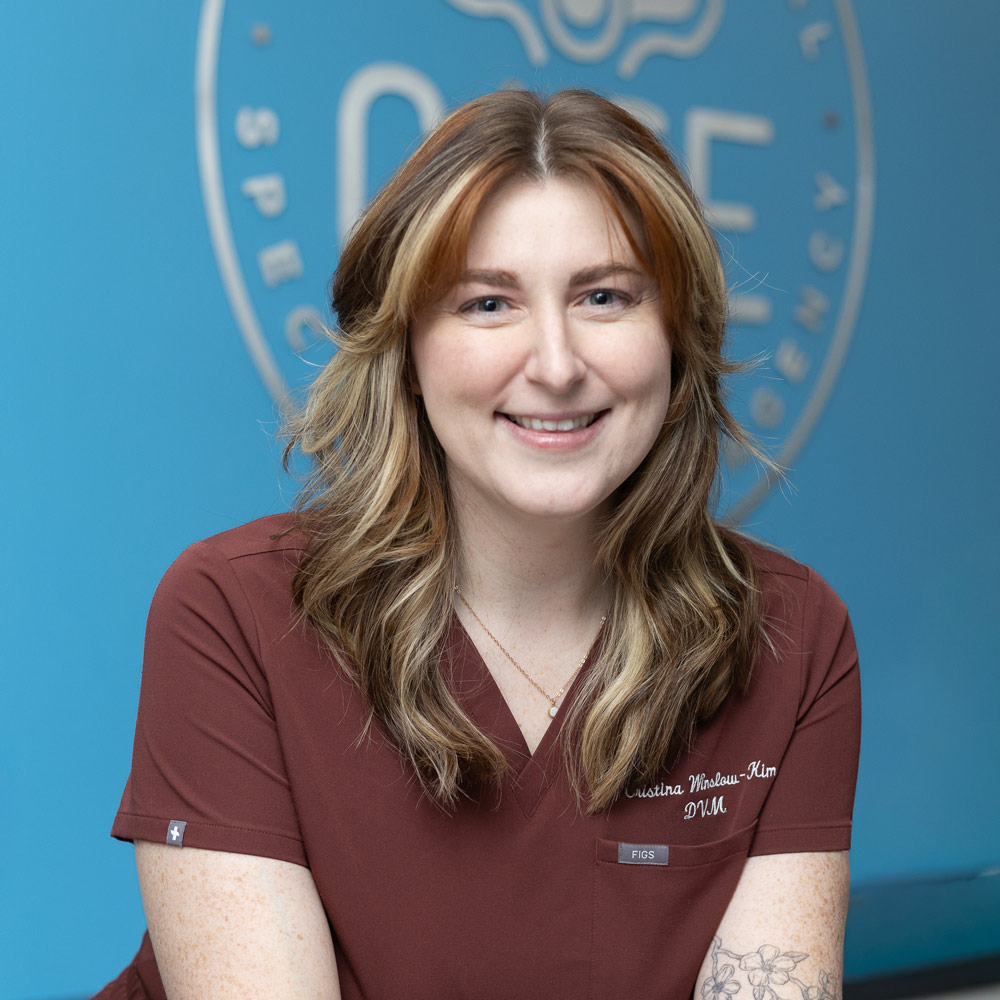
Dr Cristina Winslow, DVM

Dr. Cristina
Winslow

DVM
Dr Cristina Guijon DVM

Dr. Cristina
Guijon

DVM
Dr Kyla Arreola DVM

Dr. Kyla
Arreola

DVM
Emergency Care

Frequently Asked Questions

If you have any additional questions, or wish to speak with someone, please contact our office today.

A pet emergency includes any sudden or severe symptoms such as difficulty breathing, seizures, collapse, uncontrolled bleeding, trauma, inability to urinate, persistent vomiting or diarrhea, severe pain, or sudden weakness or paralysis. If you’re unsure, it’s always safest to seek emergency care right away.
No appointment is needed. Our emergency team is available 24/7 to evaluate pets as soon as they arrive. Patients are prioritized based on medical urgency to ensure the most critical cases receive immediate attention.
If your pet is injured or unstable, handle them as gently as possible and transport them immediately. Do not give food, water, or medications unless instructed. If safe to do so, bring any relevant medical records or medications, but do not delay care to gather them.
Visit length varies depending on your pet’s condition and required treatment. Some pets may be stabilized and discharged the same day, while others may need ongoing monitoring or hospitalization. Our team will keep you informed throughout the process.
Yes. With your permission, we communicate with your primary care veterinarian to share exam findings, diagnostics, and treatment plans to ensure continuity of care once your pet is discharged.
Absolutely. We provide 24/7 monitoring and critical care for pets who require hospitalization. Our medical team continuously monitors vital signs and comfort, adjusting treatment as needed throughout the day and night.
Costs vary based on your pet’s condition, diagnostics, and treatment needs. After an initial assessment, we will review recommended care and provide an estimate before proceeding whenever possible. Our goal is to be transparent while prioritizing your pet’s safety and comfort.

Dogs and Cats Helped

89,626

Need to See a Vet?

Get in Touch or Call 657-999-1150

CASE Animal Hospital

1400 N Burton Pl
Anaheim, CA 92806
657-999-1150

Office Hours

Monday through Sunday
Open 24 Hours a Day